
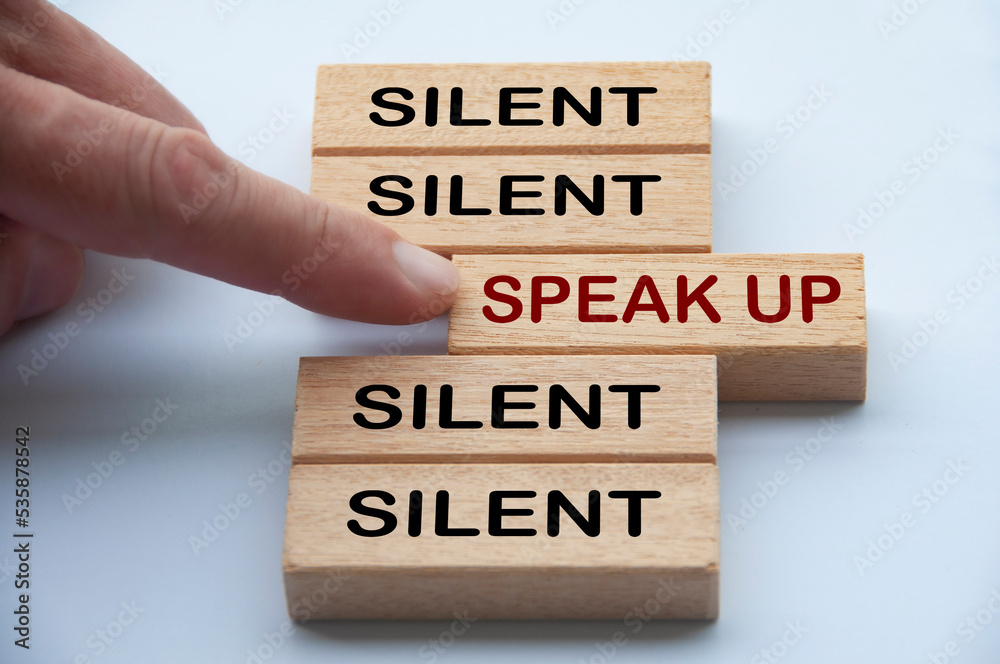
Growing up with my mom, it was definitely not safe to speak up. I learned all sorts of deflection and concealing behaviors in order to keep myself from harm. Over the years, I learned to conceal my real feelings even from myself. I stopped letting myself be aware of how I was really feeling, especially if it seemed to be in conflict with someone else’s needs.
But now all of a sudden I can see these deflection and concealing behaviors, and I’m starting to let myself not only be aware of how I’m really feeling, but even to speak it aloud to others and to take action from this awareness! And it has been life changing!
There’s one pattern I learned from growing up with my mom that now I’m recognizing myself doing all the time! When I’ve spoken something that feels risky (say I’ve said something strongly or revealed some potentially threatening information), rather than allow there to be space and silence afterwards, I will immediately jump in to try to distract us. Specifically I will point out something that is mundane, hence safe, and something that is shared (i.e. “That smells nice” or “Look at that neat bird”).
When I told my partner my realization, she commented on what a creative and smart strategy it was for dealing with my mom! A way to minimize risk and maximize potential intimacy. It is a way of de-escalating, of defusing potential charge (including my anxiety and the other person’s). And it is a strategy I’ve seen other family members use, though with different flavors—basically fill all the space so that nothing unpredictable can happen.
I’m learning with my partner to be more authentic in my presence and more direct in my communication, noticing all my habitual ways of coming at things sideways. I’ve seen with her the ways it can undermine trust so I’m very motivated to notice and change those behaviors. And as I’m doing that, I’m noticing the freedom and clarity arising in my own being.
I’ve not just been practicing with my partner—I’ve been speaking my mind all over town in all my relationships! Whereas previously I would have a lot of anxiety in my body in anticipation and a lot of self doubt afterwards, now I am just meeting the moment with my truth every day without even really thinking about it. It has been very empowering!
In one of these situations, I needed to address a housemate who’d been eating my food. Doing so successfully and undramatically, I was prompted to write a (somewhat hilarious) list of other possible responses I would have used at other times in my life.
Options:
My housemate is eating my food. I can:
I can silently stew about it
I can make it ok by telling myself it’s not a big deal
I can avoid it by not leaving food in the kitchen
I can extremely avoid it by moving out
I can avoid my housemate
I can give my housemate the silent treatment and see if he figures out why
I can tell my friends what a jerk he is
I can talk to my landlord and hope she’ll say something to him
I can talk to my landlord and ask her if she’ll say something to him
I can explode at him after weeks/months of silently stewing
Or I can just say please stop eating my food! An act of love for us both!
Despite the humor of its ridiculousness, looking over this list was humbling and painful because these are all the strategies that I have used my whole life. Not even allowing myself to know how I was feeling, absorbing all the consequences inside myself without even telling the other person I was feeling distressed, siphoning off my anger and helplessness through utilizing others, feeling like a victim and wanting to be rescued, overriding my feelings and abandoning myself, wanting others to know and not wanting others to know how I was feeling, being afraid of creating rupture in the relationship (while creating rupture in the relationship by not speaking up), and feeling ashamed and unreasonable for even having feelings or preferences. My main survival strategy with my mom was to be like water and just flow around obstacles without ever confronting them directly so I have many clever means of practicing avoidance, internally and externally.
What my partner helped me to reflect upon was the consequences of all of these avoidance strategies. The consequences on me and my well being of internalizing so much about my own experience. The lack of trust inherent in that internalizing process, making it hard for me to feel met when others don’t know what’s going on for me. And the loneliness and frustration of not actually being known because of keeping so much inside. The consequences on others, as I make them into enemies and engage in silent, or not so silent, warfare. The erosion of my relationships with them as a result of my withholds. And the painful messages that get silently reinforced for us both: that my feelings and needs don’t matter, that relationships are unpredictable and unsafe. And the consequences on community and our collective life when we aren’t authentic or direct. The polarization that happens when we take sides or hold distorted views of one another based on incomplete information. The vomiting of our negative emotional states onto one another. The messiness that results from being triangulated into situations that aren’t ours.
I am so grateful to be starting to recognize all of these survival strategies in myself and to suddenly have the inner tools to start making different choices. I know that the more I enact these new skills of direct communication, the more positive reinforcement I will have for stabilizing these new ways of being.


 Snake Medicine