
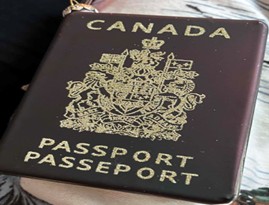
Last year for my mom’s February 14th birthday, we received the gift of the 3 things we needed to line up in order to move to Canada: the estate lawyer approved my use of funds from the sale of my mom’s house to purchase the property in Canada, my marriage with Erin was registered granting my first steps towards Canadian residency, and Orrin’s sister’s mom decided she would move with us giving everyone the green light to proceed. This year for her birthday my mom gave me Canadian citizenship!
I’d planned to submit my immigration application by my mom’s birthday, but my mom had other plans–an easier path. Just days before I was to submit my application, Erin learned—in a syncronicity phone call with a former student of mine—that Canadian law changed as of December 15 to extend citizenship to people whose grandparents were Canadian. My mom’s father was Canadian so all of a sudden I’m Canadian already—I just need to prove it.
Diving Deep
The process of proving it has proved both tricky and illuminating. It is tricky because the secrets in my mom’s side of the family means that I don’t have the basic information that I need to order the birth certificates. When my mom passed away and my sister and I needed to write her obituary, we realized we didn’t even know where my mom was born. Anytime I tried to ask her about her upbringing—even basic factual information like where did you grow up—she would immediately get up and leave the room, go upstairs, shut the door, and it would never be mentioned again. I called my mom’s siblings (she was the youngest but died first) to try to find out when my grandfather was born, but neither of them knew their father’s birthday, which also felt telling.
It has been illuminating because my quest to find the missing information has taken me on a whole exploration of my mom’s side of the family, something I never would’ve guessed even after all the healing work I’ve done around my mom over the last few years. That side of the family I distanced myself from growing up because they always seemed so dramatic and exhausting and felt unsafe (my dad’s side of the family was bookish and quiet and stable, which I more resonated with). But what I’ve been learning has been absolutely fascinating.
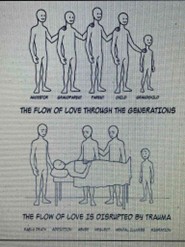
So much suffering came at the hands of my grandfather. He basically ruined the lives of 4 generations of my family. Even just the list of physical manifestations of the intergenerational trauma is sobering. My grandmother was an alcoholic due to my grandfather’s massive boundary violations and had lifelong knee problems because he pushed her down the stairs. My uncle had a stutter and my mom had lifelong kidney and urinary tract issues from their abuse. My cousin is an addict who’s been in and out of jail, I had asthma, my sister has fibromyalgia. My sister was the only one of our generation who decided to have kids—which is telling in itself.
So it feels like a bit of karmic balancing that my grandfather, who was the source of so much harm, is now the source of something positive. That he is part of creating safety and security for me, after being the catalyst for so much unsafety and insecurity.
Border Cities
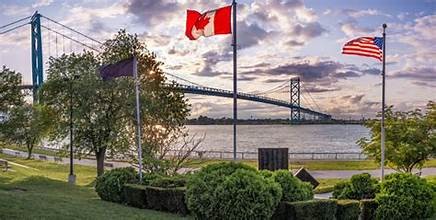
As someone who has regularly given public talks about liminality and being a liminal person (betwixt and between), it is interesting to learn that my ancestry takes me to yet another liminal zone. My grandfather and his family were from Windsor—they were born there and they are all buried there. Last weekend I decided to look up the little towns (Maidstone, Essex, Ontario and West Sandwich, Essex, Ontario) where his parents were from to see if I could get any sense of how they might have met or why they’d moved to the United States. It turns out the area where they lived (Essex was the county, Maidstone a township, and Sandwich a village—all part of the current day city of Windsor) is considered one of the oldest and most historically significant areas of Canada!
Windsor and Detroit are across the river from one another, sister cities that historically had a lot of fluidity. When the thirteen colonies declared war on Britain, and Canada decided to remain loyal to the Crown, residents along the Detroit River were given 12 months to decide which side of the border they wanted to live on. When the U.S. again declared war on Britain in 1812, Sandwich was the first Canadian territory to be attacked. It was also a prized destination for the Underground Railroad! For many Blacks fleeing the United States, Sandwich was a first taste of freedom and many took up residence there as a result.
The Ambassador Bridge was built connecting Detroit and Windsor in 1929, the same year as the Great Depression, which hit what became known as the Border Cities quite hard. My grandfather’s family moved across the border in 1927. The private Ambassador Bridge is currently a site of controversy, as Trump is trying to block the opening of the public Gordie Howe Bridge in the same location. And apparently the signage for the Ambassador Bridge is ambiguous, such that many people don’t realize that they are passing the final exit in the U.S. until they’ve accidentally crossed into Canada. This is causing suffering in the current environment because now when people try to cross back into the U.S., they are getting picked up by ICE.
When I saw that my grandfather’s family is buried in Windsor (my uncle informed me that apparently my grandfather is buried in a cemetery beneath the Ambassador Bridge!), I thought I should go for a visit and see what I can find out. They were all Catholics and I know the Catholic Church tends to keep excellent family records. Now learning more about Windsor, I definitely feel excited to plan a trip. Sandwich has a heritage festival every year celebrating its remarkable history so I think we might try to plan going during that time.
Ancestral Healing
Two years ago I’d reached out to my grandfather in the spirit world. I wanted to confront him about what he did to my mom—since nobody had ever really stood up for my mom—and I wanted to find out where his trauma came from. When I’d done a healing session back in 2018 with my former housemate, who is an Internal Family Systems therapist, everyone in my family got to hand their trauma back to the person who’d given it to them. All the trauma balls went back to my grandfather, who placed them in a lake that ignited the dawn and we all stood there together in the beautiful early morning light, feeling safe with one another for the first time.
I’d been curious—did the trauma originate with my grandfather (if so, why?) or did he receive it from someone before him? In our conversation in spirit, I tried to ask him, but his spirit just lay there in a pathetic lump in the corner, not taking responsibility for anything and not offering any information of his own. It was very disappointing. Usually when souls cross over, they are freed from their human limitations, so I’d never encountered a spirit who exhibited so little growth and so much continued self-absorption and self-pity. It filled me with disgust towards him honestly.
I’m currently taking a class with Sarah Peyton, who does trauma healing using neuroscience, on the broken father field. My relationship with my own father was wonderful—he was the emotional center of our family, the safe one—but I’m living on this land with my partner and 6 others who all have experienced abandonment by their fathers in some way. And I’m stepping into a parenting role with my partner’s kiddo and want to bring my best. So I figured it would be helpful to learn more about what the fathering role can be and what happens when there’s injury there.
A lot of Sarah’s work is with energetic contracts: what are ways that fathers use their children to stabilize themselves (so the agreements they’ve made with themselves to do that, regardless of the impact on their children), and what are the loyalty contracts kids have with their fathers to internalize their father’s view of the world and their father’s view of them, regardless of the impact on them.
In one session, I was working on my grandfather’s contract with himself to use my mom for his own needs. Once the contract is identified, the father is asked how he feels about that contract and whether he’d like to now break it. Once again, my grandfather showed up as a pathetic, self pitying lump in the corner who had no intention of breaking that contract. I felt a sense of disgust and frustration—until all of a sudden, I felt the presence of my grandfather’s father, Ernest, a man I’d never even heard of until my recent genealogical searches. Ernest came through strongly, and he was a stern man. He instructed my grandfather that my mom was meant to be regarded as precious. It felt so good to finally feel a sense of masculine accountability and leadership from that side of the family!
This week I had my first bit of compassion for my grandfather. Doing the math I realized that, if my grandfather moved to the U.S. in 1927, he would’ve been just 16 years old. Further, it appears that his father, Ernest, passed away just 2 years later when my grandfather was 18. So I started to see the possible trauma for my grandfather—and the lack of masculine mentorship he would’ve had at the turn to adulthood. Since my grandfather was the eldest boy, I could also guess that he was probably put into the man of the house role at a young age, which would’ve been a lot of pressure.
In my new choir in Powell River this season we are singing I Dreamed of Rain, a beautiful prayer for peace (“I dreamed of rain and the rains came and peace spread over the land”) written by a woman from Colorado and referencing the natural world of Colorado. It’s been emotional singing it—I carry associations with it that no one else in the room is carrying—but most especially the last verse: “And the ancient pain is forgotten, and the father’s debts are clear.”
So I’ve been contemplating what would it mean for the father’s debts to be clear. It brings me to tears even writing it now. My partner and I, and her kiddo, have been so impacted by the uncourageous choices fathers made to avoid their own pain: my grandfather’s sexual abuse of my mom that fractured her psyche and robbed me of intimacy and ease with my mom that then created my trauma, my partner’s dad’s suicide when she was a kid that shattered her foundation, robbed her of having a father’s love and guidance, and created so much unsafety in her experience of the world, and her kid’s father’s narcissism using his kids to bolster his fragile sense of self esteem.
My partner and I have both spent the majority of our lives, and our relationship, doing healing work and sometimes I feel resentful thinking of all the other wonderful things we could’ve been doing in life if we each didn’t start life with this tremendous deficit. Our current stability together is hard won, our year long break up evidence of the bumpiness that can happen when trauma meets trauma. Making family together has been a miracle, given that I early on rejected having a family of my own after my experience of family growing up, and my partner’s kiddo (who was conceived in my partner’s attachment trauma) struggles with emotional dysregulation due to his own intergenerational trauma.
Poignantly, we find ourselves here in Powell River on a property that became available due to a father dying by suicide in our barn—even through the exact means that both Erin’s dad and my grandfather chose to end their lives. Clearly, we were brought here for a deep healing, both within us and our family line, and for the land.
I’m currently reading What My Father and I Don’t Talk About: Sixteen Writers Break the Silence, edited by Michele Filgate. I just picked it up from the library on a whim and I can say it’s had a significant impact. One story was particularly poignant—about a dad who was a cross dresser. It wasn’t poignant because of gender or father stuff—it was poignant because her descriptions perfectly described how I felt with my mom.
In the author’s story, she learned about her father by feeling the bra he was wearing when she hugged him, but they never spoke of it. She writes:
“I pored over textbooks at the library trying to understand my father. The one person who knew the answers, I could not ask. We could only have a relationship if I didn’t see him.
When I was in the same room with my father, the effort it took to not see his makeup, fingernails, and pantyhose, and the effort it took to pretend no one else saw either, and the energy required to not speak of these things and to not even know of these things, combined with the constant work required to stay out of range of his rage, plus the terror I experienced when he’d walk out the door and get in the car and drive into the night, not knowing when or if he would come back—it was too much. I could not wait to get out of that house and away from him. I loved him so much but I wanted to love him from a safe distance.”
The story begins and ends with the author visiting her father at a nursing home after not seeing him for 10 years. She brings a Maurice Sendak book he’d read to her as a kid, her longing to have real intimacy with her father, and resolve that she’s finally going to ask him the questions.
Her visit reminded me of my visit with my mom when she broke her hip and was at a rehab hospital. For the author, it was spending time with her father sober for the first time. For me, it was similar—my mom had been separated from all her distractions and ability to control the world around her so she was actually present (which she hated and I loved lol). The author writes:
“I couldn’t stop thinking about this opportunity to really talk to my actual father, for the first time in my life, without the pretending-not-to-see and the ocean of alcohol separating us, denying intimacy. I wanted both of us to stop pretending-not-to-see so we could be together, for real, before he died. I wanted this more than anything, and it was so familiar: the old waiting for my father to come home.”
Throughout her life, the author had a fierce loyalty and protectiveness towards her dad—regardless of whatever shit he put her through—that I definitely resonated with. “I protected myself from him as fervently as I protected him from him,” the unbearable emotional pain and neglect another thing she pretended she did not know about.
Although “this visit felt like the beginning of a relationship, not an ending,” it was ultimately disappointing. He didn’t remember the children’s book, she read him 2 pages and he fell asleep. She told him she wanted to ask him something and he shook his head and said, “Later.”
Finally, she just asks him—“Were you gay?” and he just said no, and when she asked about the bra, pantyhose and nail polish, he just said “You knew about that?” and turned away and went to sleep.
Though she told herself “I’ll come back a lot now,” she never saw him again. When she hugged him goodbye, she told him she loved him over and over. She writes: “I did not know if the powerful tug I felt was love. It might have been the fierce longing for love.” Wow…
I’m reminded again of what a miracle my current relationship with my mom is. That I feel totally safe with her now, that I can feel her love and support and protection without any of the baggage that came with those things while she was still alive, is so incredibly moving and joyful to me. It fills needs in me I didn’t even realize I had. In doing this exploration of her family line and her context, I’m reminded again of what that sangoma (traditional healer) told me in South Africa in 2000, when she called me over: that I was spiritually powerful and would be healing for my whole family. At the time, I never could have imagined where that would take me.
Canadian and American
There is something satisfying about learning that I am also Canadian. I have always felt ill at ease with American culture. From adolescence I rebelled against the teachings of my upwardly mobile parents and teachers—that outward appearances are what’s most important not substance, that “success” is meeting the demands of external authority figures rather than your own integrity. Throughout my life, I have been mocked for being “too nice”—told I wasn’t sexy because I wasn’t edgy enough, being ridiculed in high school for apologizing when I fouled someone on the basketball team. So, as I get to know Canadian culture better (moving away from the toxic American assumption that Canada is just like the U.S.), I certainly am finding myself more at home in this environment. I feel empowered claiming my niceness and willingness to say I’m sorry as positive traits not weaknesses, and there’s a certain childlike satisfaction in telling myself that’s why I never felt at home in the U.S.
However, as I unearth my deep rooted connections to Canada and Canadian ways of being, I am also realizing how painfully American I truly am, and how much toxic American socialization I have brought with me to my beautiful new home. Just as I have inappropriately brought to my relationship with Erin defensive strategies that helped me survive the trauma and lack of safety in my family of origin, I have brought to my new community the inner defenses cultivated from my upbringing in a traumatized and unsafe national family.
The year my mom died started off with Erin and I being in a serious car accident that brought to the surface the traumatic experiences living in my nervous system of feeling blindsided by my mom, and the habitual hypervigilance and bracing that I did to try to protect myself. As I start to settle into my new life in Powell River, I begin to become aware of this same kind of unconscious internal bracing when encountering others in my community.
I especially notice it when I’m driving. I accidentally pull up too far into an intersection, inadvertently blocking another vehicle, and I brace for the angry encounter and scary and unpredictable behavior that never comes. Fear grips my stomach when I see a car parked sideways along the highway, imagining a police presence that simply isn’t there in Powell River. I wonder how long my body will continue to be jarred by this kind of dread and terror so omnipresent in the U.S. It’s like pain from a phantom limb.

[Just to give a sense of the contrast, when Orrin’s sister’s mom was en route to Powell River last year, she got pulled over for speeding. She said “I’ve never before left an interaction with police in a better mood than when I started!” Not only was she just given a warning, she left with restaurant recommendations and stickers!]
I realize other ways I need to detox from my American socialization. We attend a holiday choral concert and, as the first choir processes in, I whip out my phone to make a short video, unconsciously expecting those around me to follow suit. When they don’t, I sheepishly realize “Oh, I’m that asshole.” During the choral concert, families sit at tables together and simply pay attention to the concert. Kids aren’t disruptively wriggling around in boredom, nobody is on their devices. While it is really refreshing and heartwarming to see, it is actually shocking to me, an assault to expectations of normalcy I didn’t know I was carrying.
In choir practice week after week, 80 of us sit there for 90 minutes and not a single person has their phone out. No one is making an audio clip of a song passage to practice at home. No one is side texting out of boredom or multitasking while other sections learn their parts. They are simply present and attentive, with nowhere else to be than simply here.
Standing in line at retail shop Canadian Tire, out of habit I whip out my phone to pass the time until I slowly realize that I am the only person in the whole store immersed in a phone. I sheepishly slide my phone back into my pocket and almost immediately the woman in line ahead of me strikes up a conversation with me—because I was now available.
This is how it starts, I think—the incredible disconnection and dehumanization that’s happened in the United States. We lost the sense of shared reality. Under Trump, black is white, up is down, truth is fake. It’s like looking at a distorted fun house mirror. Standing there in Canadian Tire, connecting with my “safe” people scattered throughout the world and disconnecting from the reality of my current context, I was planting that seed.
I was rejecting the shared reality with the woman in line ahead of me, dismissing the value of that connection, telling myself that connecting with friends not in that shared reality was somehow safer and more desirable. I realize the ways that I was socialized to regard such people in my environment as not fully human, but instead as background objects in my own narrative or impediments to my progress. I realize the ways that I am that self absorbed, unconsciously competitive, internally antagonistic American that I tried to flee.
Just as how moving in together with Erin and Orrin has illuminated for me my elaborate maze of barriers to intimacy put in place to protect me from the threat and unsafety I felt growing up with my mom, the move to Powell River slowly begins to reveal the elaborate maze of barriers to intimacy put in place to protect me from the threat and unsafety I felt living in the U.S. I become fearful of poisoning my new community by bringing such toxic expectations and behavior to a place unpolluted by it. At least here there are a handful of us so that energy can pretty easily be absorbed and transmuted by the dominant energy around us—we will be more transformed by them than they will by us, I hope. But, given all the Americans flooding into Canada fleeing Trump’s regime, what is the carrying capacity of local communities before Canada comes to bear greater resemblance to its toxic neighbor to the south?
While the interruption to my internal expectations is jarring, the discrepancy between my expectations and my reality is a positive development, a process of slowly realizing I don’t need to live in so much fear. A process I’ve already been on with Erin interpersonally as I’ve been healing from my trauma with my mom. I feel tears of grief in thinking about what it must’ve been like for Erin doing this in the opposite direction—moving from Canada to the U.S. I can’t imagine how she emotionally survived, expecting to find people open hearted and present and warm and helpful, and instead encountering person after person dysregulated and self absorbed, and a bureaucratic environment of punishment and shame and self sufficiency. I can’t imagine the shock and isolation she must’ve felt, especially as she would have no one who could understand what she’d lost, nor even a way to explain it because those around her wouldn’t be able to imagine it. For Erin, it resulted in lifelong physical injuries from the birth of her son due to difficulties trying to navigate the complicated terrain of U.S. health insurance.
As I wind my way through Canadian bureaucracy, I’m finding that it is slow and intense and in many ways outdated (surprisingly dependent on phone calls!). However, it is easy to access an actual human and those humans are actually helpful! Time after time I have presented an unusual problem and been met with a cheerful can do attitude that actually resolves the problem (with representatives even calling me back the next day after investigating possible solutions!), rather than what is referred to in the U.S. as the “annoyance economy,” what people pay in time and irritation to navigate their daily lives as corporations and government bureaucracy count on people simply giving up trying to resolve problems. The weary cynicism so prevalent in the U.S. simply does not exist here. Here I feel fully human.

 Snake Medicine