Surprise, I’m Canadian

Last year for my mom’s February 14th birthday, we received the gift of the 3 things we needed to line up in order to move to Canada: the estate lawyer approved my use of funds from the sale of my mom’s house to purchase the property in Canada, my marriage with Erin was registered granting my first steps towards Canadian residency, and Orrin’s sister’s mom decided she would move with us giving everyone the green light to proceed. This year for her birthday my mom gave me Canadian citizenship!

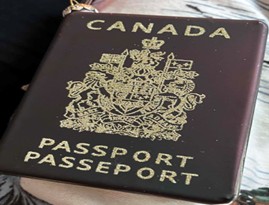
I’d planned to submit my immigration application by my mom’s birthday, but my mom had other plans–an easier path. Just days before I was to submit my application, Erin learned—in a syncronicity phone call with a former student of mine—that Canadian law changed as of December 15 to extend citizenship to people whose grandparents were Canadian. My mom’s father was Canadian so all of a sudden I’m Canadian already—I just need to prove it.
Diving Deep

The process of proving it has proved both tricky and illuminating. It is tricky because the secrets in my mom’s side of the family means that I don’t have the basic information that I need to order the birth certificates. When my mom passed away and my sister and I needed to write her obituary, we realized we didn’t even know where my mom was born. Anytime I tried to ask her about her upbringing—even basic factual information like where did you grow up—she would immediately get up and leave the room, go upstairs, shut the door, and it would never be mentioned again. I called my mom’s siblings (she was the youngest but died first) to try to find out when my grandfather was born, but neither of them knew their father’s birthday, which also felt telling.

It has been illuminating because my quest to find the missing information has taken me on a whole exploration of my mom’s side of the family, something I never would’ve guessed even after all the healing work I’ve done around my mom over the last few years. That side of the family I distanced myself from growing up because they always seemed so dramatic and exhausting and felt unsafe (my dad’s side of the family was bookish and quiet and stable, which I more resonated with). But what I’ve been learning has been absolutely fascinating.  

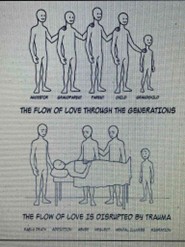
So much suffering came at the hands of my grandfather. He basically ruined the lives of 4 generations of my family. Even just the list of physical manifestations of the intergenerational trauma is sobering. My grandmother was an alcoholic due to my grandfather’s massive boundary violations and had lifelong knee problems because he pushed her down the stairs. My uncle had a stutter and my mom had lifelong kidney and urinary tract issues from their abuse. My cousin is an addict who’s been in and out of jail, I had asthma, my sister has fibromyalgia. My sister was the only one of our generation who decided to have kids—which is telling in itself. 

So it feels like a bit of karmic balancing that my grandfather, who was the source of so much harm, is now the source of something positive. That he is part of creating safety and security for me, after being the catalyst for so much unsafety and insecurity.

Border Cities

As someone who has regularly given public talks about liminality and being a liminal person (betwixt and between), it is interesting to learn that my ancestry takes me to yet another liminal zone. My grandfather and his family were from Windsor—they were born there and they are all buried there. Last weekend I decided to look up the little towns (Maidstone, Essex, Ontario and West Sandwich, Essex, Ontario) where his parents were from to see if I could get any sense of how they might have met or why they’d moved to the United States. It turns out the area where they lived (Essex was the county, Maidstone a township, and Sandwich a village—all part of the current day city of Windsor) is considered one of the oldest and most historically significant areas of Canada!

Windsor and Detroit are across the river from one another, sister cities that historically had a lot of fluidity. When the thirteen colonies declared war on Britain, and Canada decided to remain loyal to the Crown, residents along the Detroit River were given 12 months to decide which side of the border they wanted to live on. When the U.S. again declared war on Britain in 1812, Sandwich was the first Canadian territory to be attacked. It was also a prized destination for the Underground Railroad! For many Blacks fleeing the United States, Sandwich was a first taste of freedom and many took up residence there as a result.

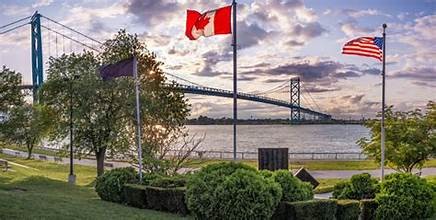
The Ambassador Bridge was built connecting Detroit and Windsor in 1929, the same year as the Great Depression, which hit what became known as the Border Cities quite hard. My grandfather’s family moved across the border in 1927. The private Ambassador Bridge is currently a site of controversy, as Trump is trying to block the opening of the public Gordie Howe Bridge in the same location. And apparently the signage for the Ambassador Bridge is ambiguous, such that many people don’t realize that they are passing the final exit in the U.S. until they’ve accidentally crossed into Canada. This is causing suffering in the current environment because now when people try to cross back into the U.S., they are getting picked up by ICE.   

When I saw that my grandfather’s family is buried in Windsor (my uncle informed me that apparently my grandfather is buried in a cemetery beneath the Ambassador Bridge!), I thought I should go for a visit and see what I can find out. They were all Catholics and I know the Catholic Church tends to keep excellent family records. Now learning more about Windsor, I definitely feel excited to plan a trip. Sandwich has a heritage festival every year celebrating its remarkable history so I think we might try to plan going during that time.
Ancestral Healing

Two years ago I’d reached out to my grandfather in the spirit world. I wanted to confront him about what he did to my mom—since nobody had ever really stood up for my mom—and I wanted to find out where his trauma came from. When I’d done a healing session back in 2018 with my former housemate, who is an Internal Family Systems therapist, everyone in my family got to hand their trauma back to the person who’d given it to them. All the trauma balls went back to my grandfather, who placed them in a lake that ignited the dawn and we all stood there together in the beautiful early morning light, feeling safe with one another for the first time.

I’d been curious—did the trauma originate with my grandfather (if so, why?) or did he receive it from someone before him? In our conversation in spirit, I tried to ask him, but his spirit just lay there in a pathetic lump in the corner, not taking responsibility for anything and not offering any information of his own. It was very disappointing. Usually when souls cross over, they are freed from their human limitations, so I’d never encountered a spirit who exhibited so little growth and so much continued self-absorption and self-pity. It filled me with disgust towards him honestly.

I’m currently taking a class with Sarah Peyton, who does trauma healing using neuroscience, on the broken father field. My relationship with my own father was wonderful—he was the emotional center of our family, the safe one—but I’m living on this land with my partner and 6 others who all have experienced abandonment by their fathers in some way. And I’m stepping into a parenting role with my partner’s kiddo and want to bring my best. So I figured it would be helpful to learn more about what the fathering role can be and what happens when there’s injury there.

A lot of Sarah’s work is with energetic contracts: what are ways that fathers use their children to stabilize themselves (so the agreements they’ve made with themselves to do that, regardless of the impact on their children), and what are the loyalty contracts kids have with their fathers to internalize their father’s view of the world and their father’s view of them, regardless of the impact on them.

In one session, I was working on my grandfather’s contract with himself to use my mom for his own needs. Once the contract is identified, the father is asked how he feels about that contract and whether he’d like to now break it. Once again, my grandfather showed up as a pathetic, self pitying lump in the corner who had no intention of breaking that contract. I felt a sense of disgust and frustration—until all of a sudden, I felt the presence of my grandfather’s father, Ernest, a man I’d never even heard of until my recent genealogical searches. Ernest came through strongly, and he was a stern man. He instructed my grandfather that my mom was meant to be regarded as precious. It felt so good to finally feel a sense of masculine accountability and leadership from that side of the family!   

This week I had my first bit of compassion for my grandfather. Doing the math I realized that, if my grandfather moved to the U.S. in 1927, he would’ve been just 16 years old. Further, it appears that his father, Ernest, passed away just 2 years later when my grandfather was 18. So I started to see the possible trauma for my grandfather—and the lack of masculine mentorship he would’ve had at the turn to adulthood. Since my grandfather was the eldest boy, I could also guess that he was probably put into the man of the house role at a young age, which would’ve been a lot of pressure.  
In my new choir in Powell River this season we are singing I Dreamed of Rain, a beautiful prayer for peace (“I dreamed of rain and the rains came and peace spread over the land”) written by a woman from Colorado and referencing the natural world of Colorado. It’s been emotional singing it—I carry associations with it that no one else in the room is carrying—but most especially the last verse: “And the ancient pain is forgotten, and the father’s debts are clear.”

So I’ve been contemplating what would it mean for the father’s debts to be clear. It brings me to tears even writing it now. My partner and I, and her kiddo, have been so impacted by the uncourageous choices fathers made to avoid their own pain: my grandfather’s sexual abuse of my mom that fractured her psyche and robbed me of intimacy and ease with my mom that then created my trauma, my partner’s dad’s suicide when she was a kid that shattered her foundation, robbed her of having a father’s love and guidance, and created so much unsafety in her experience of the world, and her kid’s father’s narcissism using his kids to bolster his fragile sense of self esteem.

My partner and I have both spent the majority of our lives, and our relationship, doing healing work and sometimes I feel resentful thinking of all the other wonderful things we could’ve been doing in life if we each didn’t start life with this tremendous deficit. Our current stability together is hard won, our year long break up evidence of the bumpiness that can happen when trauma meets trauma. Making family together has been a miracle, given that I early on rejected having a family of my own after my experience of family growing up, and my partner’s kiddo (who was conceived in my partner’s attachment trauma) struggles with emotional dysregulation due to his own intergenerational trauma.

Poignantly, we find ourselves here in Powell River on a property that became available due to a father dying by suicide in our barn—even through the exact means that both Erin’s dad and my grandfather chose to end their lives. Clearly, we were brought here for a deep healing, both within us and our family line, and for the land.   
I’m currently reading What My Father and I Don’t Talk About: Sixteen Writers Break the Silence, edited by Michele Filgate. I just picked it up from the library on a whim and I can say it’s had a significant impact. One story was particularly poignant—about a dad who was a cross dresser. It wasn’t poignant because of gender or father stuff—it was poignant because her descriptions perfectly described how I felt with my mom.

In the author’s story, she learned about her father by feeling the bra he was wearing when she hugged him, but they never spoke of it. She writes:

“I pored over textbooks at the library trying to understand my father. The one person who knew the answers, I could not ask. We could only have a relationship if I didn’t see him.

When I was in the same room with my father, the effort it took to not see his makeup, fingernails, and pantyhose, and the effort it took to pretend no one else saw either, and the energy required to not speak of these things and to not even know of these things, combined with the constant work required to stay out of range of his rage, plus the terror I experienced when he’d walk out the door and get in the car and drive into the night, not knowing when or if he would come back—it was too much. I could not wait to get out of that house and away from him. I loved him so much but I wanted to love him from a safe distance.”

The story begins and ends with the author visiting her father at a nursing home after not seeing him for 10 years. She brings a Maurice Sendak book he’d read to her as a kid, her longing to have real intimacy with her father, and resolve that she’s finally going to ask him the questions.

Her visit reminded me of my visit with my mom when she broke her hip and was at a rehab hospital. For the author, it was spending time with her father sober for the first time. For me, it was similar—my mom had been separated from all her distractions and ability to control the world around her so she was actually present (which she hated and I loved lol). The author writes:

“I couldn’t stop thinking about this opportunity to really talk to my actual father, for the first time in my life, without the pretending-not-to-see and the ocean of alcohol separating us, denying intimacy. I wanted both of us to stop pretending-not-to-see so we could be together, for real, before he died. I wanted this more than anything, and it was so familiar: the old waiting for my father to come home.”

Throughout her life, the author had a fierce loyalty and protectiveness towards her dad—regardless of whatever shit he put her through—that I definitely resonated with. “I protected myself from him as fervently as I protected him from him,” the unbearable emotional pain and neglect another thing she pretended she did not know about.

Although “this visit felt like the beginning of a relationship, not an ending,” it was ultimately disappointing. He didn’t remember the children’s book, she read him 2 pages and he fell asleep. She told him she wanted to ask him something and he shook his head and said, “Later.”

Finally, she just asks him—“Were you gay?” and he just said no, and when she asked about the bra, pantyhose and nail polish, he just said “You knew about that?” and turned away and went to sleep.

Though she told herself “I’ll come back a lot now,” she never saw him again. When she hugged him goodbye, she told him she loved him over and over. She writes: “I did not know if the powerful tug I felt was love. It might have been the fierce longing for love.” Wow…

I’m reminded again of what a miracle my current relationship with my mom is. That I feel totally safe with her now, that I can feel her love and support and protection without any of the baggage that came with those things while she was still alive, is so incredibly moving and joyful to me. It fills needs in me I didn’t even realize I had. In doing this exploration of her family line and her context, I’m reminded again of what that sangoma (traditional healer) told me in South Africa in 2000, when she called me over: that I was spiritually powerful and would be healing for my whole family. At the time, I never could have imagined where that would take me.

Canadian and American

There is something satisfying about learning that I am also Canadian. I have always felt ill at ease with American culture. From adolescence I rebelled against the teachings of my upwardly mobile parents and teachers—that outward appearances are what’s most important not substance, that “success” is meeting the demands of external authority figures rather than your own integrity. Throughout my life, I have been mocked for being “too nice”—told I wasn’t sexy because I wasn’t edgy enough, being ridiculed in high school for apologizing when I fouled someone on the basketball team. So, as I get to know Canadian culture better (moving away from the toxic American assumption that Canada is just like the U.S.), I certainly am finding myself more at home in this environment. I feel empowered claiming my niceness and willingness to say I’m sorry as positive traits not weaknesses, and there’s a certain childlike satisfaction in telling myself that’s why I never felt at home in the U.S.

However, as I unearth my deep rooted connections to Canada and Canadian ways of being, I am also realizing how painfully American I truly am, and how much toxic American socialization I have brought with me to my beautiful new home. Just as I have inappropriately brought to my relationship with Erin defensive strategies that helped me survive the trauma and lack of safety in my family of origin, I have brought to my new community the inner defenses cultivated from my upbringing in a traumatized and unsafe national family.

The year my mom died started off with Erin and I being in a serious car accident that brought to the surface the traumatic experiences living in my nervous system of feeling blindsided by my mom, and the habitual hypervigilance and bracing that I did to try to protect myself. As I start to settle into my new life in Powell River, I begin to become aware of this same kind of unconscious internal bracing when encountering others in my community.

I especially notice it when I’m driving. I accidentally pull up too far into an intersection, inadvertently blocking another vehicle, and I brace for the angry encounter and scary and unpredictable behavior that never comes. Fear grips my stomach when I see a car parked sideways along the highway, imagining a police presence that simply isn’t there in Powell River. I wonder how long my body will continue to be jarred by this kind of dread and terror so omnipresent in the U.S. It’s like pain from a phantom limb.

[Just to give a sense of the contrast, when Orrin’s sister’s mom was en route to Powell River last year, she got pulled over for speeding. She said “I’ve never before left an interaction with police in a better mood than when I started!” Not only was she just given a warning, she left with restaurant recommendations and stickers!]

I realize other ways I need to detox from my American socialization. We attend a holiday choral concert and, as the first choir processes in, I whip out my phone to make a short video, unconsciously expecting those around me to follow suit. When they don’t, I sheepishly realize “Oh, I’m that asshole.” During the choral concert, families sit at tables together and simply pay attention to the concert. Kids aren’t disruptively wriggling around in boredom, nobody is on their devices. While it is really refreshing and heartwarming to see, it is actually shocking to me, an assault to expectations of normalcy I didn’t know I was carrying.

In choir practice week after week, 80 of us sit there for 90 minutes and not a single person has their phone out. No one is making an audio clip of a song passage to practice at home. No one is side texting out of boredom or multitasking while other sections learn their parts. They are simply present and attentive, with nowhere else to be than simply here.

Standing in line at retail shop Canadian Tire, out of habit I whip out my phone to pass the time until I slowly realize that I am the only person in the whole store immersed in a phone. I sheepishly slide my phone back into my pocket and almost immediately the woman in line ahead of me strikes up a conversation with me—because I was now available.

This is how it starts, I think—the incredible disconnection and dehumanization that’s happened in the United States. We lost the sense of shared reality. Under Trump, black is white, up is down, truth is fake. It’s like looking at a distorted fun house mirror. Standing there in Canadian Tire, connecting with my “safe” people scattered throughout the world and disconnecting from the reality of my current context, I was planting that seed.

I was rejecting the shared reality with the woman in line ahead of me, dismissing the value of that connection, telling myself that connecting with friends not in that shared reality was somehow safer and more desirable. I realize the ways that I was socialized to regard such people in my environment as not fully human, but instead as background objects in my own narrative or impediments to my progress. I realize the ways that I am that self absorbed, unconsciously competitive, internally antagonistic American that I tried to flee.    

Just as how moving in together with Erin and Orrin has illuminated for me my elaborate maze of barriers to intimacy put in place to protect me from the threat and unsafety I felt growing up with my mom, the move to Powell River slowly begins to reveal the elaborate maze of barriers to intimacy put in place to protect me from the threat and unsafety I felt living in the U.S. I become fearful of poisoning my new community by bringing such toxic expectations and behavior to a place unpolluted by it. At least here there are a handful of us so that energy can pretty easily be absorbed and transmuted by the dominant energy around us—we will be more transformed by them than they will by us, I hope. But, given all the Americans flooding into Canada fleeing Trump’s regime, what is the carrying capacity of local communities before Canada comes to bear greater resemblance to its toxic neighbor to the south?

While the interruption to my internal expectations is jarring, the discrepancy between my expectations and my reality is a positive development, a process of slowly realizing I don’t need to live in so much fear. A process I’ve already been on with Erin interpersonally as I’ve been healing from my trauma with my mom. I feel tears of grief in thinking about what it must’ve been like for Erin doing this in the opposite direction—moving from Canada to the U.S. I can’t imagine how she emotionally survived, expecting to find people open hearted and present and warm and helpful, and instead encountering person after person dysregulated and self absorbed, and a bureaucratic environment of punishment and shame and self sufficiency. I can’t imagine the shock and isolation she must’ve felt, especially as she would have no one who could understand what she’d lost, nor even a way to explain it because those around her wouldn’t be able to imagine it. For Erin, it resulted in lifelong physical injuries from the birth of her son due to difficulties trying to navigate the complicated terrain of U.S. health insurance.

As I wind my way through Canadian bureaucracy, I’m finding that it is slow and intense and in many ways outdated (surprisingly dependent on phone calls!). However, it is easy to access an actual human and those humans are actually helpful! Time after time I have presented an unusual problem and been met with a cheerful can do attitude that actually resolves the problem (with representatives even calling me back the next day after investigating possible solutions!), rather than what is referred to in the U.S. as the “annoyance economy,” what people pay in time and irritation to navigate their daily lives as corporations and government bureaucracy count on people simply giving up trying to resolve problems. The weary cynicism so prevalent in the U.S. simply does not exist here. Here I feel fully human.

Turning 18

It was just my testosterone anniversary and I turned 18! It felt like a big milestone, so I asked a former student—one much closer to 18 than I—about the significance of turning 18. Especially since I was completely numb and dissociated during my original teenage years. 18 is of course when we are able to vote, an achievement that feels significant just before perhaps the most important election in the history of the United States. But 18 is apparently also the age at which you can legally get a piercing or tattoo. It is when you can first buy a lottery ticket. And of course it is the age at which you can be drafted into the military. And sure enough, for Halloween I was recruited into the Viking army led by my sweetie’s 13 year old. 😊

One of my big revelations at Sufi Camp, over the anniversary of my mom’s death, was realizing that my relationship with Allah contains a rupture and broken trust. One that arose during my first turn at 18. Unpacking that has been the gift of getting another chance at 18.

At this Sufi Camp, the Saturday night zikr was in silence—which was so powerful! During the zikr, I felt led to carry an intention for a closer relationship with the Divine, in particular in the realm of devotion.

About 15 minutes after setting this intention, I was invited into the circle to turn in the tradition of the whirling dervishes. I initially declined—turning practice is a serious discipline, one that I have not been trained in, and so I wanted to respect the practice. But immediately after declining, I realized that I’d just set an intention to have a closer relationship with the Divine, particularly in the realm of devotion, and at my first opportunity I had said no! So I awkwardly got the attention of the one who had invited me and asked for a redo. This time I said yes and entered the circle, awkward and unpracticed, but full of innocence and open heartedness. I spun in the way that made sense to me, and let myself enter the practice with abandon.

As I rejoined the circle, I had a flash of insight—a true aha moment! I realized that my relationship with God was one of broken trust. And that broken trust was preventing me from truly surrendering my heart. And that broken trust occurred around my first time as an 18 year old.

Though I’d found refuge in nature since I was a kid, my first real stop on my spiritual path was Christianity. It began in high school, when my grandma came to live with us, and I started going to Mass with her to get to know her better. Although I was confirmed my senior year in high school, I quickly became disillusioned with Catholicism when the most popular priest in our local parish was arrested for child molestation, including the young son of my high school English teacher, who was one of my closest friends at the time.

When I entered college, Christianity again found me. The first people I met at UC Santa Cruz belonged to Inter Varsity Christian Fellowship, a fundamentalist student group which is where I unfortunately ended up coming out. After being an outcast in high school, I was thrilled to find people who walked with me to class, invited me to social gatherings, and genuinely seemed to want to be my friend. After the dusty rituals of Catholicism, it was so exciting to find a God who was so relevant to my life as a student! I fell in love with that God. IVCF became my world, I was on fire with passionate devotion, and I set my path to become a missionary.  

Lola was my Bible study leader and through our spiritual collaboration, we fell in love and became lovers—my first time having consensual sex. Lola was wracked with guilt about what we were doing, believing she was compromising her salvation, so she begged us to talk to one of the IVCF leaders. That fateful choice dramatically changed my life.

We were required to go through a humiliating public confession of everything we’d done sexually, we were both removed from IVCF leadership, and we were told we could never speak to one another again, something Lola took quite seriously. “If your right hand causes you to sin, you must cut it off,” is what we were told. I was blamed for our transgression, as I’d had “those feelings” in high school, and was eventually driven out of the fellowship entirely, being told that I was “unteachable” and that my questions undermined the faith of the younger fellowship members. I lost God and I lost Lola at the same time, my 2 first loves.  

I was devastated and my heart was broken in numerous betrayals. The betrayal of Lola who sat there silently during our public confession and allowed me to take all the blame and who never stood up for our relationship. The betrayal of my IVCF friends who rejected me and subjected me to continual scrutiny and surveillance (for instance, telling me I wasn’t allowed to study alone at night with any of the women from the fellowship). And the betrayal of God, who had given me my first love and who had then ripped it away so harshly. The imprint was laid down: Love leads to devastating loss, God is not on my side, and God is not to be trusted. God is a God of hard things who takes away what you most love. Allowing God to know me would only encourage God to use this information to strip me of whatever I loved or wanted.

In response to all of this, I wandered campus aimlessly in a trauma fog, unable to go to class or function. Lola and I had been roommates and were no longer allowed to live together so I had been moved to the apartment of a friend, one of the worship leaders who started changing clothes in the bathroom because she newly felt threatened by me. I would walk the cliffs along the ocean late at night, pondering just stepping off into the abyss. I called my parents late from a nearby pay phone, unable to tell them what was happening when they asked me what was wrong. I began seeing a therapist for the first time, a Christian man who—when I told him I might be suicidal—asked me if I really wanted to lose my salvation over one person. I felt totally alone. 

Not unlike how I’d felt when I’d started college. The summer before college I’d worked at Yosemite National Park, a childhood dream come true until I was raped by a co-worker who’d preyed on my vulnerability being away from home for the first time. Fleeing his cabin in the early morning hours, I called the employee health clinic who—when I asked what I could do—told me that I should’ve thought of that before I went to my co-worker’s cabin. My innocence and trust doubly violated, it happened to be Sunday morning and, not knowing what else to do, I rode my bike to the little chapel on the valley floor and sobbed my way through the service. I felt totally alone.

I started college terrified that I was pregnant, having the only late period ever in my life, no doubt due to the incredible stress that I was carrying in isolation. It was in this numbness and dissociation that I found the Christian fellowship, what I imagined to be a safe and platonic home with other students who were interested in making the world a better place.

So that was 18 my first time through. Finally leaving the unsafety of growing up in my mom’s house only to have back to back to back devastating injuries to my innocence. I was earnestly trying to make God my orienting point, but learned that God was not a safe place to land either. This caused me to wander alone in the wilderness for decades, not coming into my true spiritual awakening until 2000.  

So it was sobering, but also really really helpful and illuminating, to realize that I still carry these traumas in my relationship with the Divine. My spiritual path has always been one of devotion (from Christian “praise” to Sufi zikrs to ecstatic dance to my relationship to the natural world), but I experienced something missing. I couldn’t fully let go because my heart was blocked from the pain of broken trust from long ago. Now, being aware of that, I can attend to and heal that broken trust, and my 18 year old self who has carried that pain over all these years. 

New Sam

It was just the first anniversary of my mom’s death. It is amazing and beautiful to me that her presence now is a deep source of comfort and refuge and safety, of guidance and companionship, the kind of relationship I’d always longed to have with her which was impossible due to the ways her trauma made her unavailable, harsh, and unpredictable. What an incredible gift to finally feel close and safe and nurtured with my mom, truly worth waiting for.  

This entire last year has been a process of disentangling from my mom, watching dissolve the cloud of fear and self-protection and defensiveness that I’ve lived in all my life, often without realizing it. As I mentioned in my last blog, I’m only slowly noticing its existence by noticing its absence. As I also mentioned in my last blog, the most painful aspect of dealing with my mom’s death has been the way that my partner has had difficulty being able to show up for it, so while my partner was out of town for 2 weeks for a silent retreat, I took myself to Ozark Sufi Camp to grieve and honor my mom with spiritual family. It was the perfect place for me to be.

The camp theme–No Part Left Out–was incredibly resonant for me in looking at the legacy of my mom in my life, all the distortions built into my personality structure as I learned to contort myself in life to try to stay safe. And the theme was a healing framework to hold the significance and complexity of my mom’s passing in my life—the deep honoring of her, the sorrow of losing her, and the tragedy of missed opportunities, as well as the relief and liberation resulting from her absence. 

My camp experience felt like an initiation, a big leveling up resulting from the momentum of the transformative work I began soon after my partner left. I am now a person who sets boundaries! It began with saying no to a spiritual retreat leader but quickly spread to family members, friends, even total strangers. I tend to continually let people overstep—and often don’t even notice when it happens–because I could never stop my mom, but now I am someone who pushes back on that. Throughout my life I never expected people to be able to show up to do their work because my mom wasn’t able or willing to, but now I am someone who does only my 50% and expects others to do their share. I previously would work really hard internally and externally to make it all ok, but now I can see that it is not mine to make ok. And my little girl is everything to me now—my loyalty goes to her. And she is learning to trust me more not to abandon her over and over as I chase after unavailable others and squash myself to try to keep everyone happy in all the ways my mom trained me to be. It is only the beginning sprouts of these new ways of being, but they are manifesting into form rapidly. 

Interestingly, my mom has become my biggest guide and ally in this work. She came to me at Sufi Camp in the form of Armadillo, whose medicine is boundaries—offering her loving support and help with this important work I’m doing, knowing as a soul that it was her personality wounds that created my need to do this important work. While I will never know what would have been possible with my mom if I’d ever said to her that I didn’t like how she was showing up and wanted it to change, I can practice that with my partner and others and see what happens.

So this has been a time of deep and accelerated growth, insight, empowerment, and clarity, learning about my limits and withholds, freeing myself to speak, saying no more often than ok, taking truly unprecedented action in my life with courage and consistency, becoming a new person in front of my eyes (as my testosterone self turns 18!). While one friend tearfully confessed that she missed Old Sam, the placater and bridge builder, it is clear to me that there is no going back from here, even if it creates some significant disruption in my life. 

I returned home from Sufi Camp with a stomach virus that felled half the camp on the last day. Spending 2 days in bed puking my guts out was a sacred death ritual to my old self, born into my mom’s trauma and conditioned to serve her rather than my soul. It allowed me to purge that residue from my body, just as smashing the clay sculpture I did at Sufi Camp in a parts workshop helped me purge that residue from my emotions.     

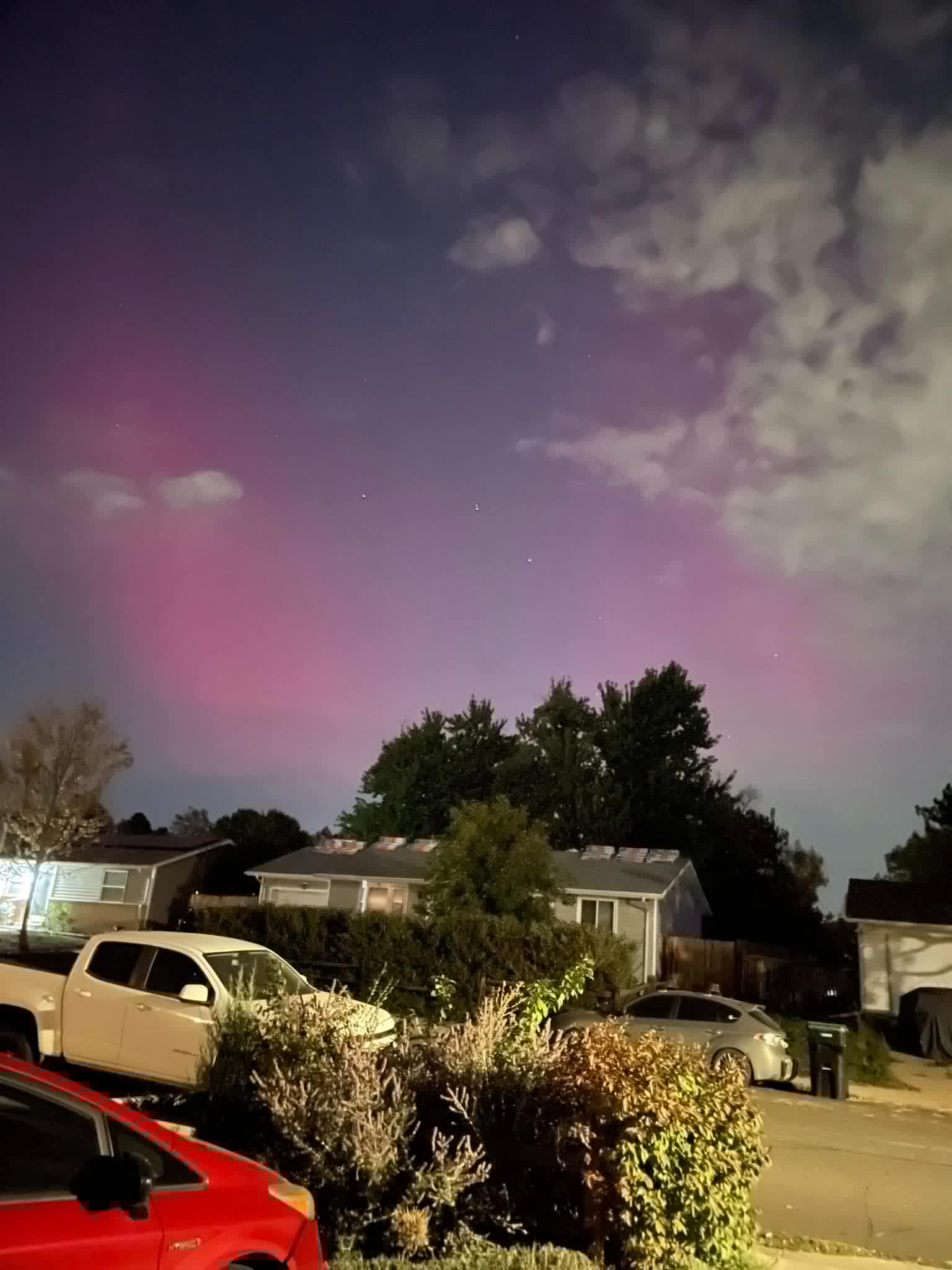
On the eve of my partner’s arrival back in town, the stars really seemed to be lining up for a spectacular culminating experience: seeing the Northern Lights for the first time, something that’s long been on my list of desired experiences! It seemed like such a fitting conclusion to the 2 weeks I’d just had, of appropriate magnitude and a whisper from Spirit acknowledging the important deep inner work I’d faithfully done. Well, the Northern Lights literally came to my door, but I missed seeing them lol! Realizing this felt sad and confusing at first and made going back into the darkness (and letting go of the hope of light) feel like a defeat somehow. I felt my spirit start to sink.  

But then I remembered I like the darkness—I am a creature of the night so it is my element—and so going back to the darkness felt comforting and surprisingly like the affirmation of myself that I thought the Northern Lights would provide. And the darkness didn’t have to feel sad or scary or alone—because I think there was something about it that perhaps tapped into my fears of the void. But then I remembered that the void is the womb—the place where new beginnings are generated, the East. Which was just perfect for me because I had just completed a fierce and vigorous ritual of release to the West, the place of letting go of what no longer serves us. Which is why I had turned my back to the west when the Northern Lights came.

And just as I wouldn’t have experienced the beginnings of that comfort and refuge with my mom if my partner hadn’t broken up with me for a time last year, if my partner had been here this year, I wouldn’t have had all this accelerated growth, nor written this blog about my journey. Nor would I have been inspired tonight to write this blog if I’d seen the Northern Lights.

All the puzzle pieces that align this way and that for us to have our particular journeys of healing and awakening and emergence. The unfolding is just fascinating, and I’m learning to trust that each experience that I’m having is exactly the right one for me. The new views you can see around each new corner often makes me speechless with surprise and wonder, and often make me laugh with both hilarity and humility. All I can wonder is where will I be taken next?

The Northern Lights from my driveway (taken by my housemate)

New Beginnings

2023 was a year of extraordinary loss for me. By the end of the year, I had lost my Mom, my romantic partner, my job/academic career, and a choir community that had been home to me for 10 years. To say that 2023 was completely life altering is not an overstatement.

2023 was also a year of extraordinary liberation. I left my academic career for good. I learned to give voice to what wasn’t working for me. And I healed my relationship with my mom, something that had haunted me and had a dampening effect on my life for as long as I’ve been alive. 

In mid-January last year, my sweetheart and I were in a bad car accident en route to a show in Colorado Springs. We walked away totally unscathed, which seemed quite miraculous given the sad state of the car, so initially the accident really reaffirmed my self-confidence and my trust in the world. Look how protected we were!

However, the nature of the accident—hitting black ice and losing control of the car, getting blindsided from behind—awoke my childhood trauma from growing up with a borderline mom. Such a familiar feeling: Everything was great, but now everything feels scary. It reactivated the hypervigilance from knowing that any situation could turn dangerous at any time without warning so always needing to be on guard.  

This feeling was reinforced in me a week later when I was attending a community meeting for the program that I teach for at University of Colorado. During the meeting I learned that the program was on administrative pause for the year, as the university decided its fate. Nobody had informed me of this, so I learned during a public meeting that a major source of my livelihood, and identity, had now disappeared. Blindside.

It was as though an alarm went off inside me. Some part of me knew that this would be the year that my mom would pass away, so dealing with the impact of growing up with her rose to the top of my priority list and my entire 2023 ended up being devoted to full time trauma healing.

Growing Up with Mom

My attachment wounds from my mom are twofold: intrusion and abandonment. When my sweetheart first met my mom—early on during Covid—my mom was bedbound from Parkinson’s and my sweetie marveled at the psychic control she was able to exert over the whole house even in her weakened state (even exerting pressure in people’s psyches when they were away from the house). In thinking about the impact my mom had on me, it has been very illuminating watching my mom’s caregiver heal after my mom’s passing. Months later, Claudia still rushes while in the bathroom or out on errands, and still nervously continuously checks her phone, in anticipation of upset from my mom. And this is a grown adult who only knew my mom for 40 hours a week for 5 years so it gave me great compassion for my kid self being raised in that stressful environment.

There was no having your own experience with my mom. My grandma told me that when I was a baby, if I was on the floor playing by myself, my mom would get jealous and come interrupt me to monopolize my attention. Growing up, if I was on the phone, my mom would just come stand in front of me until I got off the phone. She would regularly stand in the kitchen and scream my name—it didn’t matter whether I was in the bathroom, asleep, or even in the house! When I would run to see what she needed, body surging with panic and adrenaline, she would quietly ask me to get her a pan from a cabinet 2 feet away from her. Loyalty tested, readiness tested.   

Once having your attention, however, proving you were on call for her, then my mom would ignore you, the abandonment side of the cycle. My mom’s inability/unwillingness to face her childhood trauma meant she wasn’t able to actually be present with someone else very often. When she was, it was so delightful, the intermittent reinforcement kept you hooked, working hard to please to try to get that mom to show up again.

Her inner pain, and trying to keep it at bay, was very preoccupying (and managing it required a lot of frantic control) so being around her often felt quite lonely, stressful, unsafe, and unpredictable. Once I bought her a get to know your Mom book for Mother’s Day and sat down to ask her the first question: Where did you grow up? Without acknowledging my question, she got up and left the room—something that happened on a regular basis—closed her bedroom door, put on the tv, and disappeared for a couple days. Connection and intimacy rejected. Message conveyed—don’t try that again. And be perfect because if you say the wrong thing, people will abandon you (a theme that has repeated painfully over my life).

When I was a kid, at the grocery store with my mom, if I got absorbed looking at something based on my own interest, she would leave not just the aisle but the entire store. My sister and I regularly had to seek out store employees to make a lost child announcement. I learned clearly that if I did not keep my full attention on my mom at all times, something bad would happen.    

The Impact of Complex PTSD

Over 2023 I began to see all the ways this trained hypervigilance impacted my life: difficulty sleeping, difficulty settling (whether putting myself to bed or landing on the right task for the day), difficulty energetically leaving the room when on a shamanic or psychedelic journey. Any small sound or disruption would immediately pop me out of my own experience, and I’d be wide awake and sober, at the ready to cope with impending disaster. I noticed the ways I neglect self-care to prioritize attending to the needs of others.

I saw the ways I could be both slow to react—needing time for my emotions and my experience to register internally—and quick to react, whenever a present moment experience overlapped with the unprocessed pain from my upbringing. I saw the ways I could lose myself in intimacy with another, and the ways I could keep others at bay in my attempts to not lose myself in connection. When my partner got an exciting new job and I feared being left behind, I saw the ongoing impact of all those times being left in the grocery store. And I saw how I’d replicated in my professional life the painful experience of not being received that I’d had with my mom, and the devastating impact of this misattunement, most acutely faced every day as a nonbinary person living in a binary world.

When my sweetheart brought me to my first Enlightenment Intensive in the spring, I was asked 40 times a day to give my full undivided attention to my own experience—something I’d never done before. What I discovered were things in my life that didn’t work for me, needs that were going unmet—things that for my entire life had been far too threatening to allow myself even to be aware of, much less to say out loud. My main coping strategy in life was simply to not have needs and wants—they could only lead to disappointment—so I engaged in a lot of spiritual bypass to override even basic needs like eating and sleeping, ignoring the underlying unconscious belief that I somehow don’t deserve to have my needs met.

So throughout 2023 I struggled to combat this internal belief and to free myself from my coping strategies by practicing with my partner, my secure attachment context where I felt safe and valued. It was hard for me to stay aware of my childhood trauma because of the ways I had buried it to have a decently functional life, but I could notice it when my partner would act in ways that overlapped with my childhood wounds. And with my partner I felt safe enough to say how it impacted me, something that could never be uttered to my mom.    

Initially this was welcomed, but as the months of tumultuousness dragged on, as my childhood trauma continued to surface and the impact of a lifetime of misattunement revealed itself more and more, I exhausted my partner. Sharing what wasn’t working for me understandably became experienced as critique. Asserting that my needs deserved to be met understandably became read as entitlement and demand. I was legitimately self-absorbed as it was hard for me to hang on to my own experience and I couldn’t really maintain that awareness while holding another’s experience at the same time. I was practicing very new awarenesses and vulnerable choices, ones that were deeply taboo in my psychology and so carried a great deal of charge, and so I was not very skillful in utilizing them.  

The Path to Healing

I spent much of the spring and summer feeling all those submerged feelings: laying awake in the middle of the night feeling the agony of my former self in her 20s, lost and alone wandering in the wilderness without community or even the language to understand herself; feeling my baby self for the first time and the utter despair of the familiar giving up place, the resignation that I won’t be met and my needs will go unattended, and the isolated self-reliance I cultivated as a result.  

I spent a lot of 2023 disentangling myself from my mom, sorting out what was simply her that I had carried for my whole life, what was the version of her that lived within me, what was the me that had been shaped and impacted by growing up with her, and what was the essential me that was whole and intact separate from my mom’s influence. My second ketamine journey helped to clarify those boundaries. The journey itself consisted of floating around in my mom’s tortured psyche, which was quite distressing, but when I was coming back to the room, my guide asked me “Who’s here?” and I said “Sam’s here and Sam is good.”

After that journey, during an online enlightenment intensive over the summer, I had a vision of dredging up an old car covered in gunk from my solar plexis which felt like my mom. Once that was removed, I could feel the energy of my solar plexis, my will center, for the first time! And the channel that had once contained the old car became a bubbling well of nourishment replenishing me. Currently I feel myself being led forward in life from my solar plexis, pulled ahead as though there were a hook in my belly button—an odd sensation when I’m so accustomed to being led by my heart.

During this same enlightenment intensive, I allowed myself to really feel and to grieve the 30 years of my life that I lost—as a transgender person—not being in my body. And it gave me a sense of conviction to take action regarding my academic career. I received my Ph.D. just days before my 40th birthday—and went on testosterone 9 months later—so I saw clearly the way that my Ph.D. was the culmination—and the reward—for living all those years disconnected from my body. And so I must now close that door for good and not reopen it (I left the academic world twice already, but always went back due to my love for teaching).

I found my boundaries and self-respect also in the fall when I was suddenly exiled from the gospel choir I’d sung with for the past 10 years. After another nonbinary singer and I had noticed misgendering and unconscious gendered language habits intruding in rehearsals, I’d offered to do a trans awareness training with them (something I do professionally with choirs all over the country through my work with GALA Choruses). While the broader community was very responsive and appreciative, the leadership became very defensive and hostile, even sending me personal attacks over text after rehearsals. I was reminded of all the experiences I’d had in groups as a trans person where I’d felt harmed and unsafe, but had to extend myself to create repair and build bridges with the very people who had harmed me (while nobody created repair with me, even accusing me of being the aggressor while I was the one being attacked). When the leadership pointedly decided to make my offering specifically a non choir sanctioned event, I decided not to go back.

All this happened over 3 short weeks, in the midst of my mom dying, so it felt very surreal. This community that had been stable home and family to me for a decade, and a big part of my joy in life, suddenly gone, swept away as I began the descent into the underworld with my mom. I was reminded again of the impermanence of everything when, a week before my mom’s memorial, my sweetheart broke up with me, my Beloved spiritual ally and spiritual playmate. I felt myself being stripped down, my life further emptied out, at the time I most needed support.  

Transformation

Immediately after my mom passed in October, I learned of a heartbreaking family secret she took to her grave. I’d always felt that the reason my mom was borderline was because she’d been molested by her father. Though it was NEVER something that could be spoken aloud, all the signs were there: childhood kidney infections, being the “special” one who escaped the emotional and physical abuse her father inflicted on her siblings, my mom’s refusal to see her father when he was dying and her absence at his funeral, my own weirdness about sex that I’d absorbed from all the unspoken undercurrents of my childhood.

After my mom’s passing I learned from her sister that my mom had gotten pregnant in high school (presumably by her father) and had been rejected by the family and sent away to a Catholic girl’s home to have the baby and give it up for adoption. This was about 2 years before I was born and so during my birth my mom would have been reliving her very worst trauma, a secret I’m certain she kept even from my dad. It explains a lot about why she had trouble attaching to me and how her psyche got shattered. I wish I could have a final conversation with her now to tell her how sorry I am that that happened to her, how it wasn’t her fault, and how much I respect and appreciate her for her ability to survive all that.  

It’s amazing how a little piece of information can change the whole entire context for your life, making you revisit and rethink even the most basic aspects of your identity (I strongly identify as a first born, for instance, but apparently I am technically a middle child). I felt so struck by the ways that my mom and I had been swimming in sexual shame our entire lives: my mom in the sexual shame common for her era and me in the sexual shame common for mine—being queer. When I came out in college—in the midst of a fundamentalist Christian fellowship—my very first lover (unfortunately my Bible study leader) and I had to go through a very humiliating confession and were told that what we’d done was so shameful we couldn’t talk to anyone about it. It made me wonder how that landed for my mom, watching me go through something that had so much resonance with her own traumatic experience.

Initially when my mom passed, I wasn’t sure if I’d want to remain connected with her. I have a very strong spiritual connection with my dad (he leaves me dimes on a regular basis), but I didn’t trust my mom and mostly I just wanted to be finally free of her disruptive influence. However, that dramatically shifted after her memorial. I’d spent the entire year deeply immersed in the trauma of my upbringing; the gathering for the memorial reminded me of the incredible beauty and goodness of my family, and all the ways the love, warmth, and generosity of my family had impacted me and others. It allowed me to really turn towards family, instead of the habitual turning away from family I’d cultivated as a defensive strategy. I saw in my parent’s delightful marriage the beautiful role modeling I’d had of the joys of long-term partnership. Feeling my parents reunited (my dad passed unexpectedly in 2005) has been immensely stabilizing for me, feeling them again as a unit fulfilling a need in me I didn’t know I had. I feel them both with me now, at my shoulder blades like wings—offering support and stability, giving me strength and lifting me up, and enfolding me in love and protection.  

As the defensiveness I’d cultivated to protect myself from my mom began to recede, I started to have greater access to the positive memories of my mom, of which there were so many. In many ways the positive memories were the most buried and deeply threatening because within them was interwoven so much longing and hopefulness that had become too painful to allow myself. Releasing this inner barrier has been so incredibly healing and I marvel at the companionship and comfort that I can now feel so easily with my mom.   

Now—as I embark on a new year and a new life—my mom feels like an amazing ally and friend and resource. I have a framed photo of her in my bedroom (welcoming her into my inner sanctuary in ways that never would have felt safe or advisable previously) that feels immensely comforting, especially as I go through this break up. As I wrap myself up in a comforter that she’d gotten me the last time she was physically able to go shopping, I can really feel what it feels like to have a mother’s support around me. Unlike with my choir, I did stay in process with my sweetheart–when she broke up with me for a second time last month, the next morning I got a text from my mom’s caregiver saying that my mom had come to her in a dream saying that I wasn’t ok and showing her my eyes. When I got that text I wept because it was concrete evidence of our new spiritual connection and I felt so incredibly cared for.

When I look into her eyes, now I just see the kindness and deep care that has always been there. I feel safe with my mom, something I never could have imagined at the opening of 2023!! I remember the painful stuff, but it is not active in my nervous system in the same way. I feel a sense of peaceful resolution and inner order, an intactness and wholeness I’ve never felt before. And she is free as well, free from the anguish and torment that haunted her personality and created so many barriers between us.

I feel anxious about publishing this, as my mom was so very protective of her secrets. I don’t want to disrespect her in any way, or break the mirage that she so carefully constructed. I feel again that familiar pull and tension: will I choose to be loyal to my mom or to myself? This year I embarked on a new path of choosing loyalty to myself, of choosing truth over and over and over again in each enlightenment intensive, knowing that this choice not only frees me but my entire family.

I’ve recently been watching the Oprah produced show Black Cake, about a brother and sister who learn of their mother’s secrets after her death. The similarities are eerie: a child conceived in sexual assault, given away for adoption in a Catholic girl’s home, a secret first sibling—and an explanation for the remoteness of the mother, unable to free herself of her grief and her secrets. The brother is even dumped by his partner just before their mom’s memorial! Like the siblings in the miniseries, my sister and I are tentatively forging new bonds of family with one another, without the dominant presence of my mom. Foundational is our agreement: no more secrets.

The path to enlightenment, to a direct experience of reality, involves clearing anything that is not truth out of the way. So I spent most of 2023 scooping the inner boulders impeding my flow. It was very exhausting at times, but at this point I’ve developed some serious spiritual muscle from again and again pulling myself out of the inner quicksand, hand over fist, powered by sheer determination and commitment. It’s been empowering to see the degree to which I have control over my own inner experience and the ways I can change my energy due to my own focus.

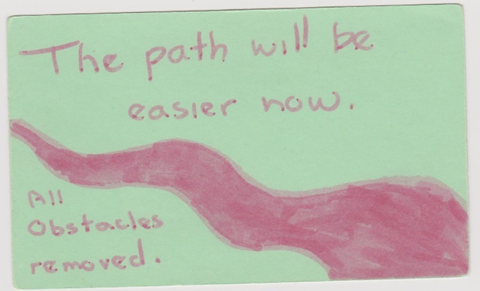
I’m very optimistic about where I will go next, what will unfold for me, having so many obstacles—inner and external—removed from my path. Being laid bare this year—as I entered my second Saturn return (the day before our accident last January!)—has freed me and from this place of lightness, self love, and empowerment, the possibilities do seem endless. I still have to do the actual labor of rebuilding my life, but the path is clear now so the way will be a lot easier.

*I asked my mom for her consent in publishing this and she said yes!